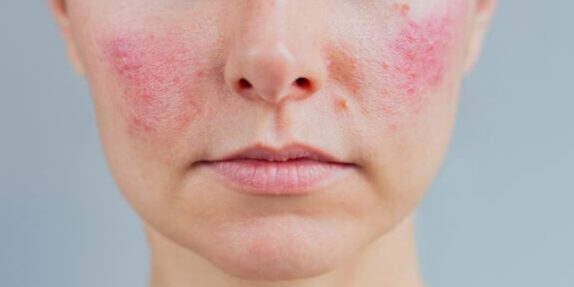
Thread veins have a habit of appearing gradually. A few fine red lines around the nose. A flush across the cheeks that doesn’t fade the way it used to. A cluster of tiny purple veins on the back of the knee that you only spot in summer.
They’re harmless in most cases, but they bother a lot of people. And there’s a good reason to deal with them now rather than next spring: laser vein treatment works best on skin that hasn’t seen much sun.
What Thread Veins Actually Are
Thread veins (also called spider veins, broken capillaries or, medically, telangiectasia) are small blood vessels sitting close to the surface of the skin that have widened and become visible. On the face, they tend to cluster around the nose and across the cheeks. On the legs, they often fan out around the thighs, knees and ankles.
Common triggers include:
- genetics, which is the biggest factor for most people
- sun damage built up over years
- rosacea, where persistent redness and visible vessels go hand in hand
- hormonal changes, including pregnancy
- standing for long periods, for leg veins
- temperature extremes, alcohol and spicy food, which make flushing worse
At the clinic we also treat related vascular marks with the same approach, including spider naevi (a central red dot with fine veins radiating outwards) and cherry angiomas, the small bright red spots many people develop from their thirties onwards. Darker, raised blood-filled bumps on the lip are a slightly different problem, covered on our venous lake page.
How Laser Vein Treatment Works
We use an Nd:YAG laser. Its wavelength is absorbed by the red pigment in your blood, which turns the light into heat inside the vessel. That heat seals the vein shut. Over the following weeks your body clears the collapsed vessel away naturally, and it fades from view.
Because the energy targets the blood and not the skin around it, the surrounding tissue is largely left alone. That precision is why the Nd:YAG laser is well established for facial thread veins and small leg veins. In a large study of long-pulsed Nd:YAG treatment, the great majority of facial thread veins and spider angiomas markedly improved or cleared over a course of sessions, with leg veins responding well but a little less consistently.
Why Autumn and Winter Are Ideal
Laser light can’t tell the difference between pigment in your blood and pigment in a tan. If your skin is tanned, some of the energy is absorbed by the melanin instead of the vein. That makes treatment less effective and raises the risk of side effects such as temporary pigment changes.
That’s why we won’t treat freshly tanned skin, and why we ask you to avoid strong sun for two weeks after each session. Starting a course in October or November solves both problems. Your summer tan has faded, the sun is weaker, and you’ll have finished your sessions well before next summer arrives.
What to Expect at Your Appointment
Your journey starts with a consultation, where we look at the veins, ask about your medical history and check you’re a suitable candidate.
The treatment itself takes around 30 minutes. No anaesthetic is needed. Most people describe each pulse as a quick snap or flick against the skin. Afterwards the treated area often has a reddish, cat-scratch look, which usually settles within a couple of days.
Before your session, it helps to:
- avoid sun exposure and fake tan on the area
- avoid aspirin and alcohol beforehand (but never stop prescribed medication without speaking to your GP)
- come with clean skin, free of creams and moisturiser on the area
- wear loose clothing if your legs are being treated
There’s no real downtime. You can go back to work the same day.
How Many Sessions You’ll Need
Most people need one to three sessions, spaced four to six weeks apart. The number depends on the size and number of veins you have. If you’re prone to vascular problems, such as with rosacea, you’ll likely need top-up sessions in future, because the tendency to form new vessels doesn’t disappear.
Results aren’t instant. Treated veins usually change colour first, from dark to lighter red, then fade over the following two to six weeks.
Who Isn’t Suitable
Laser works best on fine red veins, generally those up to one or two millimetres across. Larger blue veins on the legs usually respond better to a different approach called sclerotherapy, and true varicose veins (bulging, twisted veins) should be assessed by your GP first, as they can be a sign of an underlying circulation problem.
We also won’t treat you during pregnancy, or if the area is tanned. If you’re not sure whether your veins fit the criteria, the consultation will answer that. We’ll be honest if laser isn’t the right option.
Looking After Your Skin Afterwards
Once the veins are gone, protecting your skin helps reduce how quickly new ones form. A daily broad-spectrum SPF matters all year round, not only in summer. If you have rosacea, a skincare routine designed for reactive skin and treatments such as LED light therapy can help keep redness in check between laser sessions. We stock the ZO Skin Health range in clinic and can talk you through what suits your skin.
Frequently Asked Questions
Does laser thread vein removal hurt?
Most people find it very tolerable. Each pulse feels like a quick snap against the skin, and no anaesthetic is needed.
Will the veins come back?
Treated veins don’t usually return, but new ones can form over time, especially if you have rosacea or a family tendency. Occasional maintenance sessions keep things under control.
Can laser treat rosacea?
Laser can reduce the visible vessels and redness that come with rosacea. It doesn’t cure the condition itself, so it works best alongside the right skincare and, where needed, advice from your GP or dermatologist.
Can I have laser vein treatment on my legs?
Yes, for fine red or purple thread veins. Larger blue veins and varicose veins need a different approach and, in some cases, a GP assessment first.
Book a Consultation
If thread veins or facial redness have been bothering you, the next few months are a good window to do something about it. Read more about laser vein treatment at our Gravesend clinic or call 01474 249 957 to book.